Monday, February 11, 2013

A Reflection on My Dad


"The difficult we do immediatelythe impossible takes a little longer."
by BILL DETTMER

As I makes more turns around the block of life, I've had a natural tendency to reflect on everything that's transpired to bring me to the place where I am now. I'm a great believer in the Hidden Hand, or Divine Intervention, or whatever you choose to call it. I believe that God works in mysterious ways, His wonders to perform. One of those wonders happened to me in early 1969.

I came of age at the beginning of the Vietnam War. After graduating from college, I entered the US Air Force and reported for navigator training in Sacramento, California. I had desperately wanted to be a pilot, but my eyes weren't quite good enough. So I "settled" for being a navigator, little realizing that fate had set me on a path that would change my life forevera path that would cross that of Edward L. Bennett.

I was no great shakes academically, either in high school or college. Not for want of ability, you understand, but because I was not motivated. And motivation does not come from without; it comes from within. I think that part of my motivation problem is that I had never had a firm, coherent direction in life. So, I finished Undergraduate Navigator Training with the same lackluster performance that characterized my high school and college years...not bad, just not great. I went on from basic navigator training to Navigator-Bombardier Training, and not much changed. But after that training was complete, I was assigned to Beale Air Force Base, near Marysville, California.

Within a year after my arrival and assignment to combat crew E-16, Ed Bennett came into my life. In the B-52, there are two navigators. One does the actual navigation of the airplane. (We liked to refer to that as "Telling the pilots where to go.") That would be menavigator. I make sure we don't get lost on our way to the target. The second navigator, a much more seasoned officer, was the radar-navigator. He assisted me in navigating, but his primary job, owing to his greater experience, was "bomb aimer." That would be Ed. He was responsible for putting the cross-hairs on the target. The pilot followed the crosshairs, and shortly a million tons of nuclear fire would be on its way to dig a 1,000-foot wide, 300-foot deep smoking hole in the ground where the target used to be. Simple. Well, no...actually it was a lot more complicated than that.

The aspiration of every young navigator (like me) was to amass enough skill and experience to move over to the left seat (navigators sat on the right) of our windowless compartment where they could be a radar-navigator. But first, we had to have experience. We had to excel at our navigation job before the wing staff would consider moving us up to aim bombs.

I had been underperforming for so long that I didn't have much self-confidence. Sure, I could navigate reasonably well. We never got lost, or even very far off course. But I wasn't much for precision, giving that extra ten percent. There was a popular phrase at the time: "That's close enough for government work." Meaning that less than total precision was acceptable. If it was reasonably close, that was good enough. But not for Ed Bennett.

When Ed was assigned to our crew, he had probably forgotten more about navigating airplanes than I knew at that point. He obviously knew that my skills were not very well developed, but in the entire time I knew him, I never "heard a discouraging word" from him. There were only two expressions ever on Ed's face: an infectious smile, and a severe look of determined concentration, the latter most frequently when we were "at work"navigating a 500,000 pound airplane or practicing to drop multi-megaton bombs. While the pilot was nominally the crew commander, Ed never failed to remind him that he and I were two of only 36 people on the base that had two pilots to drive them to work in a seven million dollar airplane. (Things were cheaper back thenthat same airplane, if you could even buy one, would be closer to five hundred million dollars today.)

Though I didn't know it at the time, my life was about to change forever the day that Ed Bennett reported to our crew. Ed made sure that everything we did, we did as a team. He and I did things together that most navigators did alone. And we also did things together that radar-navigators did alone. He insisted that we train so that either of us could sit in the other's seat for any mission, and the results would show no difference afterward. Ed always cross-checked every calculation I made for navigation, and I checked his bombing ballistics the same way. You think it's not easy to make a math error in flight planning? Try adding in base 60: How much is 37 minutes and 54 minutes, in your head, quickly now! 91 minutes? Wrong. It's an hour and thirty one minutes. Add an hour an forty minutes to that...go ahead, use your fingers if you have to. Two hours and eleven minutes. There are those who have screwed up such computations, and those who will. But I never did, because Ed Bennett checked every one of my calculations during flight planning. No other radar-navigator in the squadron did that for his navigator. But within a month or two, it would have been unthinkable to me to do it any other way.

Ed Bennett insisted that both of us pay full attention to what was happening and to actively navigate throughout every phase of flight. There was no "dead-heading"... a term used to describe navigators who sat back during flight and let the pilots fly by reference to radio navigational aids on the ground, the way airliners do today. During one late night mission, returning from low-altitude bombing runs at St. George, Utah, one of our pilots said, "Well, I guess you guys downstairs (meaning the navigation team) can kick back now..." Ed keyed the microphone put the pilot in a verbal "brace" against a notional wall: "Pilot, we're navigating down here. We're always navigating. And don't you ever forget that!" And we did, all the way to final touchdown. We watched to make sure the pilots leveled off at the right altitude in the traffic pattern. We monitored the airspeed, to make sure we didn't stall out of the sky. On final approach, Ed would always put the radar cross-hairs on the approach end of the runway, so we could cross-check whether the pilot was on course and glide slope for a safe landing. We 're always navigating, pilot.

Lest you think this is an insignificant thing, in 1975 a personal friend of mine from pilot training was the aircraft commander of a C-141 cargo plane returning from Japan to McChord Air Force Base in Tacoma, Washington, in the middle of the nighta 14-hour mission. And once the C-141 was under positive radar control by the Seattle Air Route Traffic Control Center, the navigator kicked back to "dead-head" the rest of the way in. A poor choice of terms. You see, the navigator dead-heading made that crew and sixteen passengers...well, dead. That cargo plane drilled a smoking hole into the northwest side of Warrior Peak in the Olympic Mountainsbecause the navigator wasn't paying attention when the air traffic controller addressed a Navy A-6 aircraft by the C-141's call sign, telling that pilot to descend to 5,000 feet. So my friend, the C-141 pilot, acknowledged the direction to descend...when there were 8,000-foot mountains in the way. That would never have happened on our crew. Ed would not have let it happen, nor would I because we navigated all the way to touchdown. If our pilot had received an erroneous command such as that, either Ed or I would have insisted he not follow the it until it was safe to do so.

Ed Bennett's effect on my self-confidence was immediate and profound. One of Ed's favorite sayings was, "The difficult we do immediately. The impossible takes a little longer." This was Ed's way of saying, "Navigator, there's nothing we can't do." Funny thing is, I bought into that load of malarkey, hook, line, and sinker. Only it wasn't malarkey, and Ed proved it to me time and time again. We consistently did things on missions that others in the squadron didn't think were possible. Things like executing bomb releases within one or two seconds of the clock time scheduled before takeoff, after flying for four or five hours. Or scoring a direct hit on a target, in the dark, with half the equipment failing. Or completing two or more hours of celestial navigation (navigating only with reference to the stars) within a minute of the scheduled time and no more than a couple of miles off.

In 1969, our crew was tapped to fly what was known as a Giant Lance mission. This was a simulated airborne alert mission. Until January 1968, Strategic Air Command (SAC) kept a certain number of B-52s, loaded with nuclear weapons, in the air over the US or Canada, where they would be safe from destruction if the Soviet Union ever launched a surprise missile attack. This was common practice for the eleven years after 1957, when the Russians put Sputnik into orbit. It stopped after the second crash in two years of a nuclear-armed B-52. The first, over Palomares, Spain, caused an international incident. The second, over Greenland, convinced SAC's generals that this was too risky to keep doing. So they made do with ground alertscrews able to run to fully loaded bombers and get rolling and into the air in five to seven minutes. But were we to have to strike the Soviet Union, it would be a mission longer and more tiring (and stressful) than any mission most crews had flown. So, the Giant Lance mission was to give crews the chance to practice navigating and refueling for 25 hours straight, over open ocean or Arctic icepack where there was nothing to see to determine our position.

Crew E-16 took off on one of these missions in August 1969. Our route of flight took us out over the Pacific Ocean near the California-Oregon border. From there, we were to fly a great circle arc to Japan, never coming within radar range of land until we met up with an airborne tanker that was to launch from Okinawa. About halfway to Japan, some seven hours since our last sight of land, we received a radio transmission from Headquarters SAC, saying that a typhoon over Okinawa would cancel our planned refueling. Instantly, Ed and I started recalculating how much farther toward Japan we could fly, turn around, and still make it back to our base without running out of fuel.

We had been navigating by shooting the sun with a sextant for seven hours. We did it for another two hours, then turned south (farther away from land) before turning back east. And we droned on for another nine-and-a-half hours, navigating by the sun and stars, without reference to any land-based navigation aids. Celestial navigation in the air is inherently fuzzy. A navigator considers himself lucky if he ends up within ten miles of the planned destination after two hours. After nineteen hours, to be within 50 miles would be just fine for most navigators. When we crossed the northern California coast on our way back home, after nineteen hours out of sight of land, using only the sun and the stars to navigate by, we were five miles off of our planned coastal penetration point. I don't know of anybody else who has ever done something like that. But Ed and I did. He checked my calculations, check my lines of position, and as we said to the pilot that night months before... we're navigating down hereand don't you forget it.

Ed Bennett instilled in me a standard of performance in which anything less than perfection was not acceptable. It could always be better. And because we made it better, my confidence in myself and what I could do skyrocketed. In fact, my wife reminded me that there's a fine line between supreme self-confidence and cockiness...implying that I frequently crossed it. But as Ed used to say, "If you can do it, it ain't bragging."

Which brings us back full circle to the question of government work. Ed Bennett redefined the phrase "good enough for government work." It meant something different to the slackers than it did for us. To Ed and me "good enough for government work" meant there was zero distance between the target and where the bomb hit, zero time difference between the planned release time and the actual release time, and zero distance between the planned end-celestial-navigation point and the airplane's actual position. In other words, perfection. We didn't always achieve it, maybe one time our of ten. But whenever we did, Ed would announce to the crew, "That's close enough for government work."

The difficult we do immediately, the impossible takes a little longer.

Close enough for government work.

If you can do it, it ain't bragging.

Those three phrases symbolize what I learned from Ed Bennett: there's nothing we can't accomplish if we decide to do it; exceedingly high personal standards of performance; and supreme confidence in our abilities.

These lessons served me well in the remainder of my Air Force career, and in my two subsequent careers, teaching graduate management courses for the University of Southern California and in international consulting. In the Air Force, I went on to nine more professional military training schools, including pilot training (yes, I finally got to fly the airplane!), Intercontinental Ballistic Missile Launch Crew training, and an assortment of other formal training schools. If I didn't finish first in my class in any one of these, I was a distinguished graduate (top 10 percent). I subsequently built a thriving international consulting business...and you know, I didn't realize I couldn't do that. So I did it.

This may sound a lot like bragging, or as my wife said, cockiness. But see, a wise man once taught me: If you can do it, it ain't bragging.

Ed Bennett set me on the course to being the person I am today: self-assured, confident, and with higher standards of performance than almost anyone else. Ed, God bless you, and keep you, and make His face to shine upon you. I know he will... and that's close enough for government work.

Sunday, February 10, 2013

Seeing My Dad's Impact on a Friend


I think it is too easy at times to take advantage of our parents and grandparents without realizing their past history or story. Today Anne and I had the privilege of reconnecting with one of my dad’s special friends from the Air Force. I had some memory of Bill and Diane but really didn’t know how my dad had been part of their lives. I knew that the Dittmers were closer to my age then my dad’s. I had received an e-mail last night from Bill hoping to connect with us before they left or Tucson the next day. I quickly e-mailed and then gave him a call.

We talked a little bit last night so we could make plans for a rendezvous today. I never know how my dad is going to respond to new people or going out for food. So I decided to just show up and kidnap him around 9:30 and go to our usual spot – Cocos. I didn’t know whether I would recognize Bill and Diane but I did. She hadn’t changed very much in 30 years. I told my dad about them as I got him ready to escape from his Senior Care Facility, he perked up and got excited to see them.  I was pleasantly surprised that he actually recognized them. He won’t remember that we had breakfast together later today but he does remember the distant past.

We ordered our food and once Grandpa was settled Bill said that he had something he had wanted to tell my dad and me for the last 30 years, especially since he has known about Dad’s Dementia. I could tell that this wasn’t going to be easy as he shared that he might cry while sharing. He went on to tell us about Grandpa being instrumental in his overcoming many fears in life, especially while doing his training to become a navigator. He gave a brief overview of his life and how dad had been so helpful in his becoming confident in facing life’s ups and downs.

He shared a few of dad’s rather amazing or pithy statements like, “We can do the difficult today but the impossible will take a few more days.” It was as if another world about my dad had been opened up which I really didn’t know much about. I then realized as Bill is talking that this was during Dad’s last few years in the Air Force before he retired and went back to college. I should really have known about my dad’s way of being an encourager and helper type because that is my DNA. I always thought it was my mom who molded me into who I’m today but it is just as much my dad’s doing.

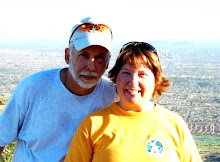
We had a great breakfast as Anne and I filled them in on our history and also my mom’s last year or so. Dad sat there and listened and occasionally would say how much he loved and appreciated them coming to see him. I’m so thrilled to have reconnected and have gotten their info, which I had an e-mail but had little reason to contact them. I know that Bill has blessed me with a great picture of my dad that I will cherish for the rest of his life and my life. My dad is an incredible father and flyer whom I’m sure influenced many others during their transition from being a newbie to a seasoned aviator.

I know that my mom must be thrilled as she observed us having a great chat with her friends, the Dittmers. Life is such an amazing journey that when someone else gives a glimpse into a loved one’s past it is like having blinders taken off of your eyes. Thanks so much God for making this happen today!!

Thursday, February 7, 2013

Getting It?


I know it is easy to throw rocks at each other. I must confess that as I share my journey with doing community/neighborhood work that too often I’m talking about my self both as a kid and as an aging adult. I know that Jesus was quick to say don’t fixate on the speck in your brother’s eye when you have a log sticking out of your own eye. Yet, the tendency of all is to be quick to see the faults of others and really believe that they’ve got it all together.

Last night as I’m picking up kids for tutoring one of my younger guy teens pulls out his lighter and flicks it. It was dark now so it stuck out immediately regardless of the other stoolies in the van. I don’t lose my cool but confiscate the lighter and we finish picking up the group for doing tutoring. After I drop off the vanload I talk with this teen. I ask the obvious question about what would happen if he had done this in Grandma’s SUV? His response was expected, “I would get in real trouble.” so my response was just the same, “So what consequence do you think should happen because of your actions?”

I know that most guys in today’s world have lighters handy to either light up or just to have for fun. I can relate to being a pyro a little bit. I loved starting fires especially as an Eagle Scout that camped often. What annoyed me was after handing out the punishment, you have to miss tutoring and stay in the van, I discover that he had already reclaimed the lighter and it was back in his pocket. Oops! I took it back and then debated whether I call grandma, wait or let him confess to her.

As we are in the middle of tutoring I get a call from a homeless teen that we have been helping over the last month or so. He has been through some difficult situations and made some good steps to figuring it out and then also some poor choices that are confusing. He texts me and says it is a personal emergency and needs to talk. I text back and remind him we are in the middle of tutoring and don’t have time till later that night. He had already ticked me off when he asked for advice about what he should do with finding $200 in an envelope inside a bathroom at a local grocery store. The challenge was that he had already used the money and made the false assumption that it was his because he found it. I know it was easy for a homeless guy to think that God has supplied him with rent money and some extra change for cigs and a Thirst-quencher.

I really don’t like to talk while driving especially with a very sensitive topic that is not for anyone else to hear. So I call him back and hear some news which isn’t a shock but very sad to realize that he has gotten someone else into trouble and needs to resolve the situation. My response was that his actions had already created a situation that is beyond help and he needed to be totally honest and work with this other person. My frustration mounts when I realize that he could have talked to me a week or so before with the same news but had chosen to be silent.

After talking with someone else about this homeless teen’s circumstance I realize I have been used and need to confront the guy. I don’t enjoy having to be asking tough questions but at this juncture it is the only way I can relate back to him. So I text after a morning meeting and he calls me and the first question I ask was, why aren’t you at work? He knew I was upset already and didn’t have a quick come back which was preferred. I told him under the circumstances he needed to be at his telemarketing job and no excuse would cut it.

I continued with a few questions that pushed the point that he hadn’t been honest with me from the beginning and then put me in a situation where he had connected with some of my friends. It was these friends who I believed he had used in a deceptive fashion to get help. I explained that the games were over and that from this day forward he had to be on the right track or I couldn’t talk or help anymore. I know in the past when we had talked this way that he was close to tears and either couldn’t talk or was afraid to come clean.

We finish our conversation and I explain unless he fills me in on his poor choices that I couldn’t help any more. I know it is easy for anyone reading this to be quick to judge this teen and be quick to ‘beat him up’ for wasting an opportunity in getting real help. Yet, the reality is that I’m not much different. As an adult I can do pretty much anything I want and get away with it because no one but God is looking over my shoulder. I know that there is redemption and forgiveness for this guy, anyone or myself when we confess our circumstances and ask God for help. The challenge is whether any of us will follow through or just talk about doing it.

“Getting it” is part of everyone’s life but age and circumstances make it different for a young mom to understand how to juggle life between little kids, doing the house work and loving her husband who works outside the home. I also know that any of my teens who have grown up without any credible life examples that it is also difficult to know what they should do in any circumstance. Please pray for my young teen that loves lighters and my older teen that is living on the street. 

Wednesday, February 6, 2013

My Awesome Anne!


It is been an amazing experience watching my Anne over the last year. It has been tough living through her cancer scare last July. She had just finished a temporary job that was awesome because it helped pay the bills and save a little. Just as it was finishing she has some issues and ends up in the doctor’s office being told that she has a 99% of having Ovarian Cancer. So we have a week to digest or talk about the situation before her surgery.

I will always remember our time as a family with our kids and their spouses sitting outside around the pool at a local resort. I don’t think any of us had cried or been totally drained emotionally. We all expressed our love and appreciation for our Anne or mom. We spent a lot of time praying and caring for each other. The following Tuesday we arrive early at the hospital with a few friends and some of our kids. The morning was very stressful. We awaited word from the doctor. Anne in her typical fashion had taken a thank you card with candy and flowers to the doctor’s office last week because of how great they were to get her in before the doctor left for a lecture trip.

We were all sitting outside the coffee shop area and finally got buzzed on our pager and I quickly go to the elevator to go back upstairs to the waiting room. The doctor just happens to be on the elevator as we are getting in and gives me a 3-minute summary. She is fine and there is NO CANCER. I’m not sure if I really cared if there was anything else from the doctor. We now waited the next hour or so for our Anne to wake and hear the great news. I was totally undone but so thankful that the news was good and our lives could go back to normal.

It was after this cancer scare that Anne continues to look for work and discovers an opportunity to go through Chaplaincy training at Good Sam. Initially this all sounded like a great idea for Anne to get graduate training in better understanding the practice of spiritual care in the context of extreme suffering or grieving. Anne dives into the program and it isn’t too long before she has become an experienced Chaplain in the ER or Trauma Centers helping both the patients and the staff. The program, her fellow interns and the directors are now stretching her to improve on a daily basis.

We just worked through her mid-term evaluation that was more a reflective overview of what she had learned over the last 2 months or so. It was an awesome experience to see how my Anne has always been an incredible shepherd and caregiver for God’s flock. The challenge is not being in what is perceived as a key leadership role. I know that most pastors’ wives live in their husband’s shadows. Yet, my Anne has always been my equal if not superior in many areas. We have always been a team that senses and understands each other’s weaknesses and strengths.

I am so excited to have my Anne be affirmed by her experience over the last 2 months with working in the hospital and being able to be God’s powerful presence with those in great need. What I think is incredible is how the hospital staff view the role of the chaplain as being critical to the overall success of the hospital. As I share this it isn’t to say that the training and practical experience has been easy it hasn’t. I know that being around traumatic situations takes an emotional toll on everyone. The lessons being learned is how to let God and his powerful Spirit be the one who work through you. It isn’t easy for Anne or me not to think that we have the answers to most people’s circumstances. The key lesson is this context is that most times the best caregiving done by a chaplain is just being there to listen, to hold a hand and even cry with the family.

I know that my Anne has some fears of facing her weaknesses or biases when it comes to being evaluated by some of the staff. She eventually will have to explain and defend her theological views of suffering, grieving and how to help. I think what has happened is that Anne is gaining confidence through the affirmation of the many who have benefited from her being a good listener, someone who is able to practically care and then when needed pray.

I am excited to see my Anne be used by God in a totally different context that truly is hers and not mine. I know that she will do well and better understand her role and place in God’s kingdom. This will ultimately make our work together better as we understand the dynamics of living in a broken and fallen world. 

Tuesday, February 5, 2013

Little Guys


I’ll be the first to admit that I just love hanging out with my little kids at New City. I know that they can be wild, messy and not the best to listen all of the time. The backdrop, which few understand, is that most of these are drug kids who grew up with parents that are substance abusers and most likely have had issues since the womb. What is great is seeing over time how my little guys like Pee Pee, Peanut and Almond are growing up.

This last week one of my awesome interns, Jenessa, brought some of her GCU basketball friends to help out with tutoring. It was so much fun watching these really tall guys lift up my little guys and helping them dunk or hang on the basket. As we talked one of the basketball players at GCU asked if I wanted to bring some of the guys to their game on Saturday night. I couldn’t refuse. We had taken 40 a few weeks before and had a great time. Unfortunately all of these little guys were gone for a birthday party.

I was only going to bring just a few but it turned out I brought 10 little guys and then a couple of other families that had little kids too. I will always remember watching my Pee dancing and jumping up and down as the game went on for 2 hours. It was amazing to watch all of these little guys sit and watch for this long. Typically they can’t sit still for more than just 10 minutes. I so much was drawn into their enthusiasm and excitement for the game.

I know that as an adult, especially older adult, it is so easy to have the wrong expectations and sense of what kids should be like. My wife is the one quickest to say that God never intended little boys to be imprisoned for hours in kindergarten but should be outside enjoying the out of doors getting to dig in the dirt and build tree houses. You might say that we are old people that love acting like youngsters.

It doesn’t surprise me Jesus went out of his way to put children in the middle of his activities. He understood in his day, not much different than our day, that too often children are viewed as being less than human and always pushed into the background. This became a real issue when Jesus gave the entry path for the kingdom as becoming like a little child. I know that in my circles too often our intellectual ability or theological understanding become the path to spiritual greatness not becoming a little child who is quick to scream, dance and shout at a basketball game.

Jesus defined our relationship with him as literally being re-birthed. He used images that made it difficult for a spiritual leader in his day to understand how this is possible when I’m already old. Jesus was a master of painting a picture of what new life is all about when we lay down our lives in order to receive new life through Christ’s life, death and resurrection. The challenge is that I don’t like going backwards in order to go forward.

I know that as a little kid growing up I was super blessed to have a mom and dad that were always there for me. I was able to do the typical little kid things like play baseball, do scouts, dig tunnels and get to explore. I can remember my dad getting me musical instruments when I was 10 and 11. This began my rock and roll career – HA. Yet, imagine what it would be like to grow up without a dad or a consistent mom in your life. I know that my little kids are street smart and can exist on their own but this isn’t really living.

I will remember the picture of my little guys, Pee, Peanut, Steven, Bookie, Josh, Isaac, Stephon and others jumping up and down at the games as the band did the typical Queen song – We will rock you. The sad thing was that the game ended with our tall friends loosing by one point. We were so bummed out. Yet, I am thrilled that these big guys can remember when they were little guys and choose to be special friends to my little guys.